
Resource · Guide
TWIC Reader Rule guide
The U.S. Coast Guard's TWIC Reader Rule requires Risk Group A facilities and vessels to replace visual TWIC checks with electronic inspection. This guide covers who falls into Risk Group A, what a compliant electronic inspection includes, how current your Canceled Card List needs to be, what records to keep, and how to update your facility security plan under 33 CFR Parts 101, 104 and 105.
01 · Overview
What the TWIC Reader Rule is
The 2016 final rule (81 FR 57651) replaces visual TWIC inspection with electronic inspection at Risk Group A facilities and vessels. Every entry to a secure area needs an electronic inspection, including biometric identity verification, at all MARSEC levels.
Reader and PACS standards sit in 33 CFR 101.510 to 101.530. Vessel and facility obligations sit in 104.265 and 105.255, with recordkeeping in 104.235 and 105.225.

02 · Scope
Who it applies to
Risk Group A is defined by cargo and passenger exposure. Groups B and C keep visual inspection but may adopt readers voluntarily.

CDC bulk facilities
Facilities that handle Certain Dangerous Cargoes (CDC) in bulk, or transfer CDC in bulk to or from a vessel. Defined in 33 CFR 160.204.

Passenger vessel terminals
Facilities that receive vessels certified to carry more than 1,000 passengers. Applies to the berth and the access points serving it.

Risk Group A vessels
Vessels certified to carry CDC in bulk or more than 1,000 passengers, and towing vessels moving CDC barges. Crew-size exemptions apply under 33 CFR 104.105.
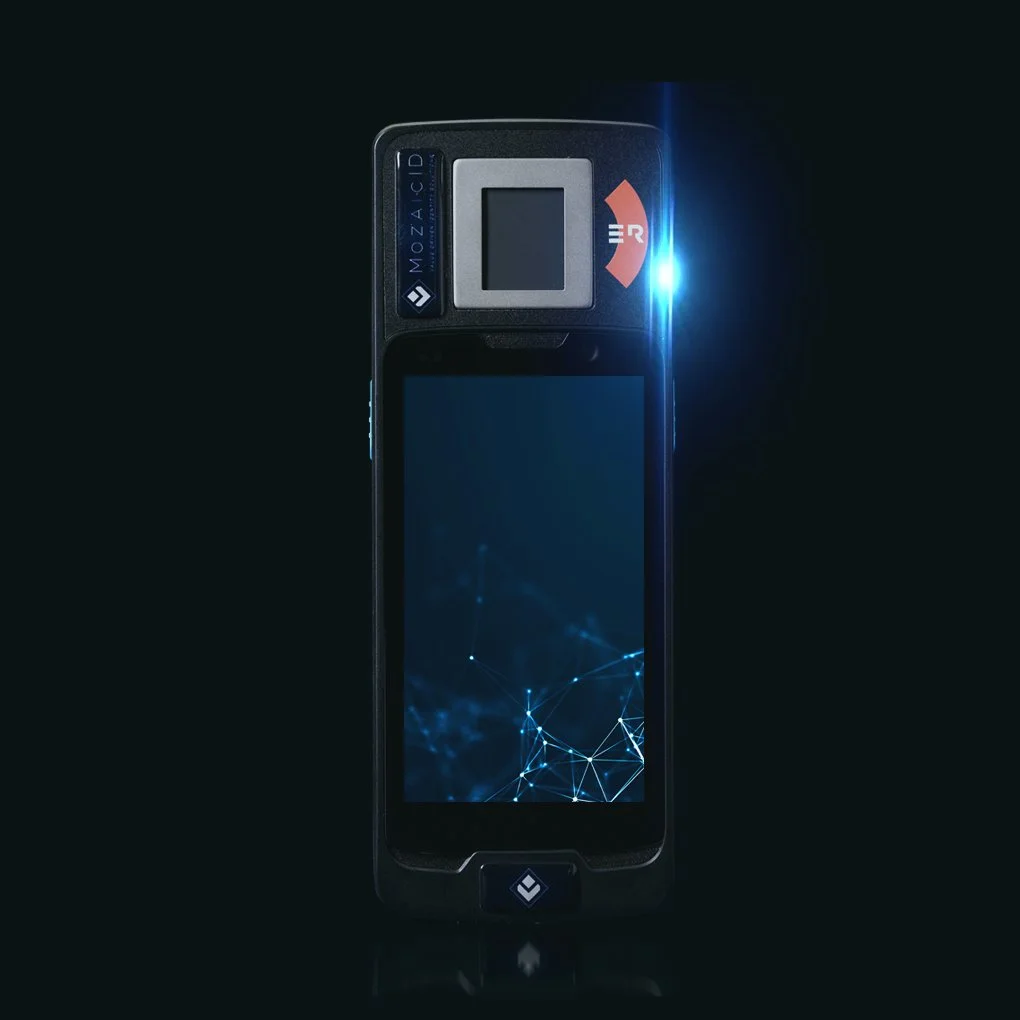
03 · Requirements
What electronic inspection means
Under 33 CFR 101.515, an electronic inspection has three parts. Skip one and the read doesn’t count.
- 01
Card authentication
Cryptographic challenge to the card's authentication key, proving the chip was issued by TSA and isn't cloned. A CHUID read alone doesn't satisfy this.
- 02
Card validity check
FASC-N checked against TSA's Canceled Card List. The list must be no older than 7 days at MARSEC 1 and 1 day at MARSEC 2 and 3 (33 CFR 101.520).
- 03
Identity verification
Live fingerprint matched to the biometric template stored on the card. A visual photo comparison doesn't count for Risk Group A.
04 · Records
Keep a record of every check
Owners and operators must keep electronic TWIC inspection records for at least two years and make them available to the U.S. Coast Guard on request. Plan for FASC-N, date, time, access point and result per read, and make sure handheld reads at offline posts reach the archive.
See how the Portal keeps records05 · Checklist
How to get your facility ready
What to settle before your effective date.
Facility Security Assessment- 01Confirm Risk Group A status per berth and cargo, not just per facility. CDC handling can be intermittent
- 02Inventory every secure-area entry point, including pedestrian gates, vessel gangways and MARSEC-only posts
- 03Pick fixed PACS-integrated readers, handhelds, or both per point. Handhelds cover low-volume or temporary posts
- 04Spec readers from the TSA Qualified Technology List and confirm the Canceled Card List update path, including offline posts
- 05Amend the FSP or VSP access-control section and submit the amendment to your COTP or the Marine Safety Center
- 06Define the read record (FASC-N, time, location, result) and two-year retention before go-live
- 07Write the fallback procedure for failed reads, damaged cards and reader outages, and train guards on it
TWIC Reader Rule questions
Edge cases FSOs and compliance leads raise most.
Applicability follows CDC handling in bulk, so intermittent operations can still bring a berth into scope. Get a written determination from your COTP rather than assuming an exemption.
The U.S. Coast Guard has delayed implementation for several facility categories more than once. Confirm the current effective date for your facility type in the Federal Register before locking your schedule.
33 CFR 101.520 points to TSA's Qualified Technology List as the standard for TWIC readers. The QTL qualifies the hardware, so using a listed reader settles the reader question at inspection. Your procedures and records are still on you.
Yes, if it performs authentication, validity and identity checks to the same standard (33 CFR 101.530). Many facilities pair fixed PACS lanes with handhelds for vessel access and MARSEC posts.
Electronic inspection is optional for Risk Group B and C, but voluntary readers still need to meet the same technical standard if you rely on them in your FSP.

Secure Your Facility with Confidence
Whether you're implementing TWIC verification for the first time or upgrading your existing access control system, our team can help you find the right solution.
Not sure what your facility needs? Take our 5-question, 60-second Facility Security Assessment for a tailored recommendation.